Meta Description: Sciatica is a nerve condition that painkillers cannot fix. Learn how identifying the true source of compression leads to effective, lasting non-surgical recovery.
Sciatic pain has a quality unlike most other kinds of discomfort. It isn’t confined to one spot – it travels, sometimes burning, sometimes sharp, sometimes like an electric pulse, from the lower back through the buttock and into the leg, occasionally reaching all the way to the foot. It can shift intensity without warning, ease off for a few days, and return with renewed ferocity.
For people dealing with sciatica, the inconsistency itself can be disorienting – as can the advice, which often ranges from ‘rest completely’ to ‘keep moving’ without much clarity on which is right, when, and why. What cuts through this confusion is a clear understanding of what sciatica actually is, why standard pain management falls short, and what a genuinely effective Sciatica Treatment plan looks like in practice.
Sciatica Is a Symptom, Not a Standalone Diagnosis
This distinction is fundamental, and it’s why so many self-treatment attempts for sciatica miss the mark. Sciatica describes the experience of sciatic nerve irritation – the pain, tingling, numbness, and weakness that result when the nerve is compressed or inflamed. It does not describe a specific cause.
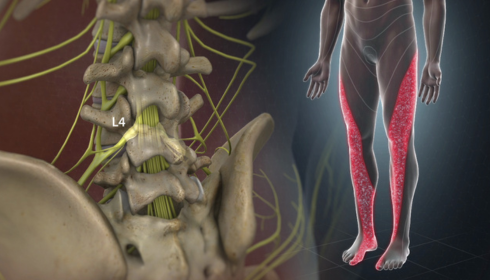
The sciatic nerve originates from nerve roots in the lower lumbar spine (L4, L5, S1, S2, S3) and travels through the pelvis, deep within the gluteal region, and down each leg. Compression or irritation can occur at multiple points along this pathway, and the source matters enormously for determining the right treatment.
Common causes include a herniated lumbar disc pressing on a nerve root, lumbar spinal stenosis narrowing the canal around the nerve roots, piriformis syndrome in which a deep gluteal muscle irritates the nerve as it passes through, spondylolisthesis in which a vertebra has slipped forward and placed tension on the nerve, and facet joint inflammation that creates localised nerve root irritation.
Each of these causes requires a somewhat different therapeutic emphasis. Treating them as interchangeable – with generic stretches or generic medication – is why results are so often incomplete.
Why Painkillers Are the Wrong Starting Point for Sciatica
Anti-inflammatory medication and analgesics can reduce the intensity of sciatic pain temporarily, and there are circumstances – during acute, severe flare-ups – when they play a useful role. But they do nothing to address what is pressing on the nerve.
The nerve irritation that drives sciatica involves two overlapping processes: physical compression from whatever structure is encroaching on the nerve’s space, and chemical inflammation that develops in the compressed tissue. Medication can moderate the inflammatory component, but it cannot reduce a herniated disc, widen a stenotic canal, or relax a hypertonic piriformis muscle. As soon as the medication clears the system, the structural compression remains – and the pain returns.
More significantly, long-term reliance on pain medication can mask the nerve’s distress signals, allowing the underlying compression to worsen undetected. Persistent nerve compression – left untreated for months or years – carries a genuine risk of lasting nerve changes that are harder to reverse.
What Effective Non-Surgical Sciatica Treatment Targets
Effective Sciatica Treatment begins with identifying which structure is compressing the nerve and at which level. This is not something that can be determined from symptoms alone – the pattern of pain and neurological symptoms provides strong clues, but a comprehensive clinical assessment is essential for accuracy.
At ANSSI Wellness, every Sciatica Treatment plan begins with this thorough evaluation before any hands-on care begins. The goal is to understand the specific cause of nerve compression in this individual patient, not to apply a standardised protocol.
Once the cause is established, a multi-layered non-surgical treatment plan typically includes:
Non-Surgical Spinal Decompression: For disc-related and stenosis-related sciatica, computerised spinal decompression therapy applies carefully controlled, intermittent traction to the lumbar spine. This creates a reduction in intradiscal pressure that can allow herniated disc material to retract away from the compressed nerve root. Improved fluid exchange within the disc supports its natural recovery. Multiple sessions are typically needed to achieve progressive, lasting decompression.
Targeted Physiotherapy and Nerve Mobilisation: Specific exercises are used to reduce neural tension, improve the mobility of the sciatic nerve within its surrounding structures, and strengthen the muscles that support correct lumbar spine alignment. Neural mobilisation techniques gently move the nerve through its full range, reducing adhesions and restoring its ability to glide freely.
Soft Tissue Work and Gluteal Release: Where piriformis syndrome or deep gluteal tightness is contributing to the nerve compression, targeted massage and manual therapy release the muscular tension that is pressing on the nerve. This is often a component of sciatica management that is under-emphasised in standard care.
Postural and Movement Education: Many sciatic nerve compressions are perpetuated by how people sit, stand, and move. Prolonged hip flexion (sitting), habitual leg crossing, forward-flexed posture, and asymmetric loading all sustain the conditions that irritate the sciatic nerve. Practical guidance on modifying these patterns is a key part of preventing recurrence.
The Recovery Mindset: Active, Not Passive
One of the most common mistakes people make with sciatica is treating recovery as a passive process – something that happens to them through treatment sessions while they wait. In reality, the most successful sciatica recoveries involve patients as active participants.
This means completing the home exercise components of the treatment programme consistently, not only attending sessions. It means making the ergonomic adjustments discussed during treatment rather than reverting to previous habits. It means choosing movement that supports nerve recovery – gentle walking, swimming, careful stretching – rather than defaulting to full rest, which reduces circulation and slows nerve healing.
It also means communicating clearly with your care team about what is and isn’t working. Sciatica treatment plans often require some adjustment as the nerve responds – what’s most helpful in the early stages may need to evolve as recovery progresses.
When to Expect Improvement – and What Patience Actually Means
Sciatic nerve recovery is not always linear. Many patients experience a gradual reduction in the frequency and intensity of their symptoms over three to eight weeks of consistent non-surgical care, with continued improvement extending beyond that. Neurological symptoms – numbness, tingling, weakness – often lag behind pain improvement and may take longer to fully resolve as the nerve heals.
Patience in this context does not mean passive waiting. It means consistent engagement with the treatment process while trusting that biological healing takes the time it takes. Rushing back to aggravating activities too soon, or abandoning treatment because improvement feels too slow, are the two most common reasons for preventable setbacks.
If significant neurological symptoms are present – particularly progressive weakness or any changes in bladder or bowel control – prompt medical evaluation is essential, as these may indicate a degree of nerve compression requiring more urgent management.
Preventing Sciatica from Becoming a Recurring Problem
One of the most valuable outcomes of a well-managed course of sciatica treatment is not just the resolution of current symptoms but the understanding and physical resilience to prevent future episodes.
People who complete their rehabilitation and make the recommended lifestyle adjustments tend to have far fewer recurrences than those who seek treatment only during acute flare-ups and then return to the same habits that triggered the problem. The disc that has been successfully decompressed and is supported by strong, well-conditioned spinal muscles is significantly less vulnerable than one that recovers passively and is returned to the same mechanical environment that caused the problem.
The team at ANSSI Wellness supports patients not just through active treatment but through the education and ongoing guidance needed to maintain their recovery over time.
Conclusion
Sciatica is a condition that demands a root-cause response, not a symptom-management reaction. The nerve is telling you something specific about compression in your spine or surrounding tissues. The most effective thing you can do with that information is pursue expert evaluation, commit to a structured non-surgical treatment programme, and engage actively with your own recovery. That approach consistently delivers what painkillers and passive rest cannot: real, lasting relief.